Episode 14

full
Published on:

7th May 2026

Why Imposter Syndrome Could Be Blocking Your Progress - And How To Break Free

If you're fully qualified and experienced in your work, or any leadership role - and yet you still feel that you have to "over-perform", as if you could be found lacking at any moment... you could be experiencing "imposter syndrome".

Imposter syndrome is not a recognised psychological disorder, but a "cognitive distortion" that was first identified in the late 1970s among high-achieving women. More recent scientific research has found that it can affect people more equally across the genders these days, but that it's more common among ethnic minority groups. This could be due to cultural messaging about status or stereotypes.

In this podcast, I look at how imposter syndrome happens, the kinds of problems it can cause, why some people have it and others don't, and I'll also suggest some ways to overcome it if it's happening to you.

Cover art by BiancaVanDijk on Pixabay.
Listen for free

Show artwork for The Inner Kindness Therapy Podcast

About the Podcast

The Inner Kindness Therapy Podcast
In this podcast, I discuss some of my own personal psychological experiences, as well as more philosophical thoughts about the mind in general.
Our culture places huge value on the intellect, while the emotions and the body are often seen as elements to be controlled. In this podcast I explore how we can work on all of these elements, to improve energy levels, mental freedom and self-empowerment.

About your host

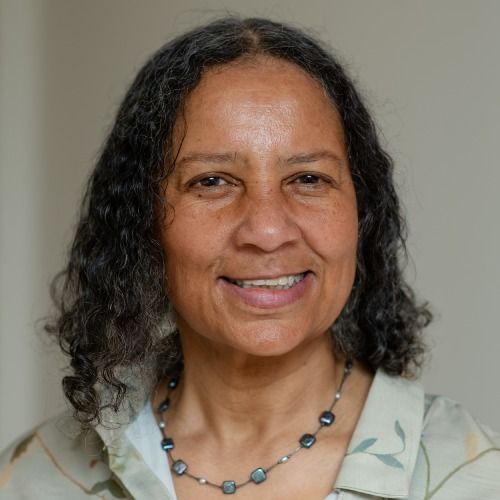
Profile picture for Natalie Minnis

Natalie Minnis

I’m a therapist trained in Hypno-CBT which is a combination of hypnotherapy and cognitive behavioural therapy. I also use other approaches, especially ACT (Acceptance and Commitment Therapy).
Psychotherapy can be a bit of an alphabet soup – there are so many different modalities. This can be very confusing for anyone who wants to find a therapist or learn more about it. The main thing that fascinates me is how the mind works, and I’ve found that all of these approaches take me a bit closer to that understanding.

My biggest client is myself. I’ve had many sessions with different types of therapists over the years, and I’ve also done a lot of self-help, diving into the deep inner realms of my own mind. I’d like to share some of the learnings with you.